
Medically reviewed by Dr. David Biro, MD, PhD – Board-Certified Dermatologist | Last Updated: May 2026
Botox for men works the same way it does for women, but it is not the same treatment. Men have stronger facial muscles, thicker skin, and different aesthetic goals, which means the dosing, injection technique, and approach need to be adjusted. The goal for most men is to look refreshed and rested without looking like they had anything done.
At kalon Dermatology in Brooklyn, our board-certified providers treat male patients regularly and understand the specific anatomical and aesthetic differences that make Botox for men its own category. Whether you are considering Botox for the first time or looking for a provider who gets what men actually want from the treatment, here is everything you need to know.
Why Men Need a Different Botox Approach Than Women
The biggest difference between Botox for men and women comes down to muscle mass. Men generally have larger, stronger facial muscles, particularly in the forehead and between the brows. Stronger muscles require more Botox to achieve the same smoothing effect.
Research published in dermatology journals confirms that men often require higher starting doses, sometimes nearly double what women need for the same treatment areas. The most common cause of unsatisfying results in male patients is actually under-dosing, where the provider uses the same amount they would for a female patient and the results fall short.
The other major difference is brow shape. Women often want a subtle arch or lift to the brow after Botox. Most men want the opposite. A masculine brow sits lower and flatter, and Botox needs to be placed carefully to maintain that natural, horizontal brow position. An injector who does not account for this difference can give a man an unintentionally arched or surprised look.
This is why choosing an experienced provider who regularly treats male patients matters more than most men realize.
Most Popular Botox Areas for Men
Men and women often target similar areas, but the priorities tend to be different. The most common Botox treatment areas for men include:
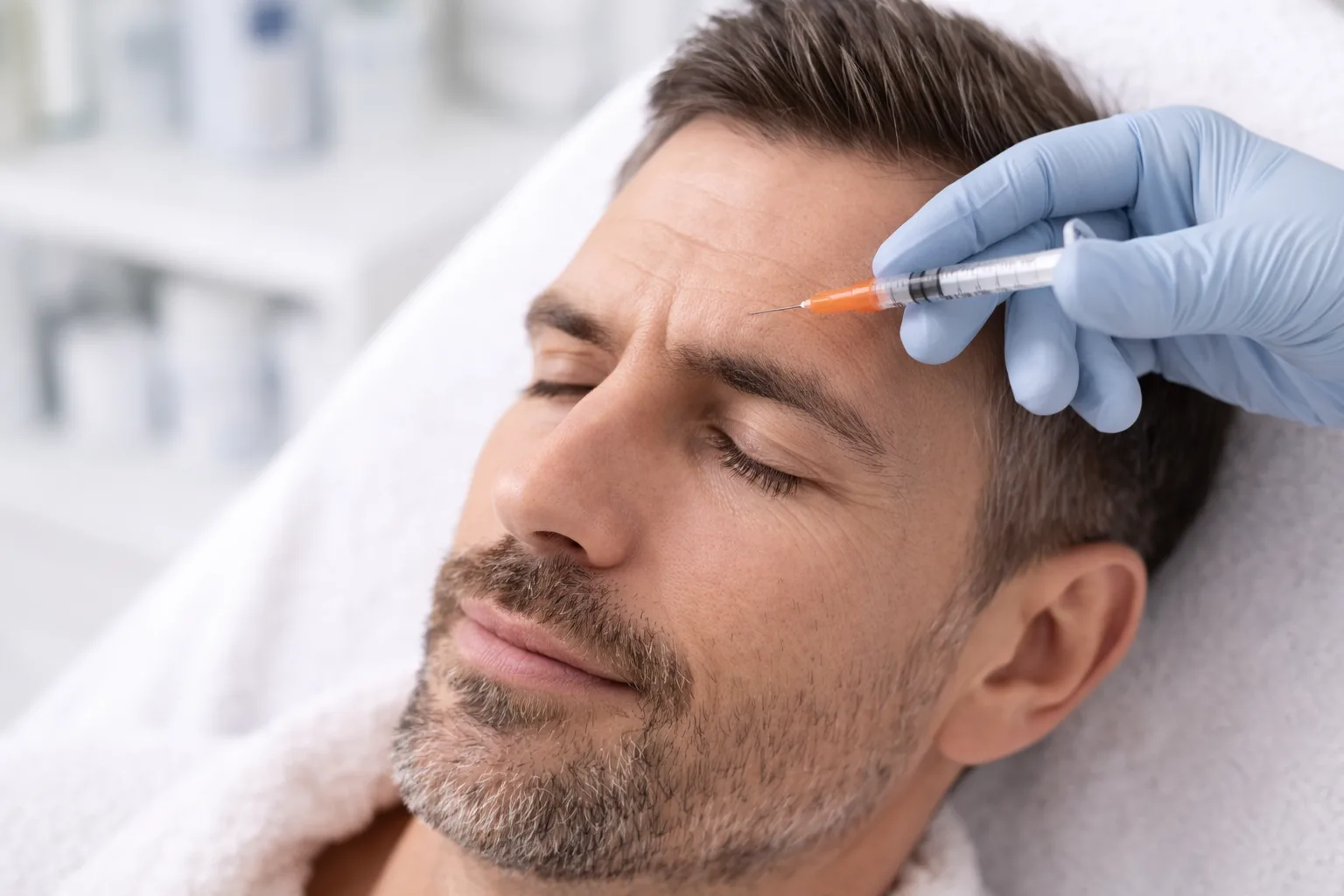
Forehead lines. Horizontal lines across the forehead are the number one reason men seek Botox. These lines can make you look older, tired, or stressed. Botox relaxes the frontalis muscle to smooth these lines while keeping natural movement.
Frown lines (the “11s”). The two vertical lines between the eyebrows are caused by repeated frowning or concentrating. These are the lines that make men look angry or unapproachable even when they are relaxed. Treating the glabellar area creates a more approachable, rested appearance.
Crow’s feet. The fine lines at the outer corners of the eyes from squinting and smiling. Men with broad facial musculature around the eyes may need slightly more units to achieve smooth results in this area.
Jawline and masseter. Botox in the masseter muscles, the muscles used for chewing, can slim a wide or square jawline and relieve jaw tension from clenching or grinding. This is an increasingly popular treatment among men.
Excessive sweating (hyperhidrosis). Botox is FDA-approved for treating excessive underarm sweating, and this is one of the most sought-after non-cosmetic Botox treatments among men. If antiperspirants are not enough, Botox injections can significantly reduce sweating and improve quality of life.
What the Experience Is Actually Like for Men
If you have never had Botox before, the process is simpler than you might expect. The entire appointment takes about 15 to 30 minutes, and most of that is the consultation. The actual injections take 10 to 15 minutes.
The needles used for Botox are extremely fine. Most men describe the sensation as a quick pinch, comparable to a mosquito bite. At kalon Dermatology, numbing cream is applied before injections. For patients who want extra comfort, laughing gas (Pro-Nox) is also available in the office.
There is no downtime. You can go straight back to work, the gym (after 24 hours), or whatever your day looks like. There are no bandages, no visible marks, and no recovery period. The most you might notice is slight redness at the injection sites, which fades within a few hours. For more on post-treatment activity, read our guide on how long after Botox you can work out.
Results start appearing within three to seven days, with full results visible at the two-week mark. Nobody will know you had Botox unless you tell them. The change is subtle. You look like yourself, just more rested.
Do Men Need More Units (and Does It Cost More)?
Yes, men typically need more Botox units than women to achieve the same result. This is because of larger, stronger facial muscles that require a higher dose to relax effectively.
| Treatment Area | Women (typical) | Men (typical) |
|---|---|---|
| Between brows (glabellar) | ~20 units | 30-40 units |
| Forehead | 10-20 units | 20-40 units |
| Crow’s feet (per side) | 10-15 units | 15-20 units |
Because Botox is priced per unit, men should expect to pay more per session than what they may have heard from a partner or friend. The exact cost depends on how many areas are treated and how many units your provider recommends based on your facial anatomy.
At kalon Dermatology, your provider will give you exact pricing during your consultation before any treatment begins. CareCredit financing with plans up to 12 months is available to make treatment more manageable.
Will Anyone Be Able to Tell?
This is the question most men actually want answered, and the answer is no, not if your provider knows what they are doing. The goal of Botox for men is not to eliminate every line on your face. It is to soften the lines that make you look tired, angry, or older than you feel while keeping your natural expressions intact.
A skilled injector uses a conservative approach, especially for first-time male patients. You should still be able to raise your eyebrows, furrow your brow, and show expression. The change is that those movements will not create deep, permanent-looking creases anymore.
The best compliment after Botox is not “you look different.” It is “you look great” or “did you just come back from vacation?” That is the result most men are looking for.
How Long Does Botox Last for Men?
Most men see results lasting approximately three to four months. However, several factors can influence how long your results last.
Men tend to have faster metabolisms and higher testosterone levels, which can cause Botox to wear off slightly faster than it does for women. Active lifestyles, intense exercise routines, and physically demanding jobs can also accelerate the breakdown.
The good news is that men who maintain a consistent treatment schedule, typically every three to four months, often find that their results last longer over time. The muscles gradually become trained to relax, meaning you may eventually need fewer units or less frequent visits.
If you are curious about when it is the right time to start, check out our article on the best age to start Botox.
Why Brooklyn Men Choose kalon Dermatology
kalon Dermatology provides a comfortable, professional environment for male patients. Our providers understand that most men want an efficient appointment, honest answers about what to expect, and results that look completely natural.
Our team includes Dr. David Biro, an Assistant Clinical Professor of Dermatology at SUNY Downstate and a New York Magazine “Top Doctor,” and Dr. Michael Gladstein, a Castle Connolly Top Doctor with nearly three decades of experience. With over 60 years of combined experience across our team of board-certified dermatologists and specialists, kalon provides the medical expertise that ensures safe, effective treatment tailored to male facial anatomy.
Beyond cosmetic Botox, our practice also treats common concerns for men including hyperhidrosis (excessive sweating), hair loss, acne, and skin cancer screening. Everything is available under one roof.
kalon Dermatology is rated 4.8 stars with 275 Google reviews at our Brooklyn location (2792 Ocean Avenue, Sheepshead Bay) and 5.0 stars with 28 reviews at our Staten Island office (796 Castleton Ave). We serve patients from Sheepshead Bay, Brighton Beach, Midwood, Gravesend, Manhattan Beach, Marine Park, Flatbush, Bensonhurst, Bay Ridge, and surrounding communities.
CareCredit financing is available with plans up to 12 months. To schedule your consultation, call 833-635-2566 or book online.
Frequently Asked Questions
Is Botox safe for men?
Yes. Botox has been FDA-approved for cosmetic use for over 20 years and is one of the most studied cosmetic treatments available. There is no difference in safety between men and women receiving Botox.
What age should men start getting Botox?
There is no set age. Some men begin preventative Botox in their late 20s or early 30s to slow the formation of deep lines. Others start in their 40s or 50s to soften existing wrinkles. Your provider can recommend the right time based on your skin and goals.
Can Botox help with jaw clenching or teeth grinding?
Yes. Botox in the masseter muscles can relax the jaw and reduce clenching and grinding. Many men find relief from jaw tension and headaches related to bruxism through this treatment. Schedule a consultation to discuss whether this is right for you.
How do I choose the right Botox provider as a man?
Look for a board-certified dermatologist or provider who regularly treats male patients and understands male facial anatomy. The dosing, injection patterns, and aesthetic goals are different for men, and experience with male patients makes a significant difference in results.
Can I combine Botox with other treatments?
Yes. Many men combine Botox with dermal fillers, laser treatments, or hair restoration services. At kalon Dermatology, our providers can create a comprehensive treatment plan that addresses multiple concerns in one visit.
Medical Disclaimer: This article is for informational purposes only and is not a substitute for professional medical advice, diagnosis, or treatment. Always consult with a qualified healthcare provider regarding any medical concerns.