
Medically reviewed by Dr. David Biro, MD, PhD | Board-Certified Dermatologist | 30+ Years Experience | Last Updated: May 2026
Quick Answer
Sculptra is a poly-L-lactic acid (PLLA) injectable that stimulates your own collagen production over months rather than instantly adding volume like hyaluronic acid (HA) fillers. It is best for patients who want gradual, natural-looking facial restoration that lasts two to three years. Most patients need a series of two to three sessions spaced four to six weeks apart, with full results visible at three to six months. Unlike HA fillers, Sculptra cannot be dissolved if results are unwanted, which is why injector experience matters.
If you have been researching injectable treatments for facial volume loss, you have likely come across Sculptra alongside familiar names like Juvederm, Restylane, and the RHA Collection. While these are all called “fillers,” they actually work in fundamentally different ways. Sculptra belongs to a separate category called biostimulators, and understanding how it differs from traditional hyaluronic acid fillers can help you decide which approach fits your goals.
This guide explains how Sculptra works, what makes it different from HA-based fillers, who tends to be a good candidate, and what to expect from treatment at our practice in Brooklyn.
What Is Sculptra?
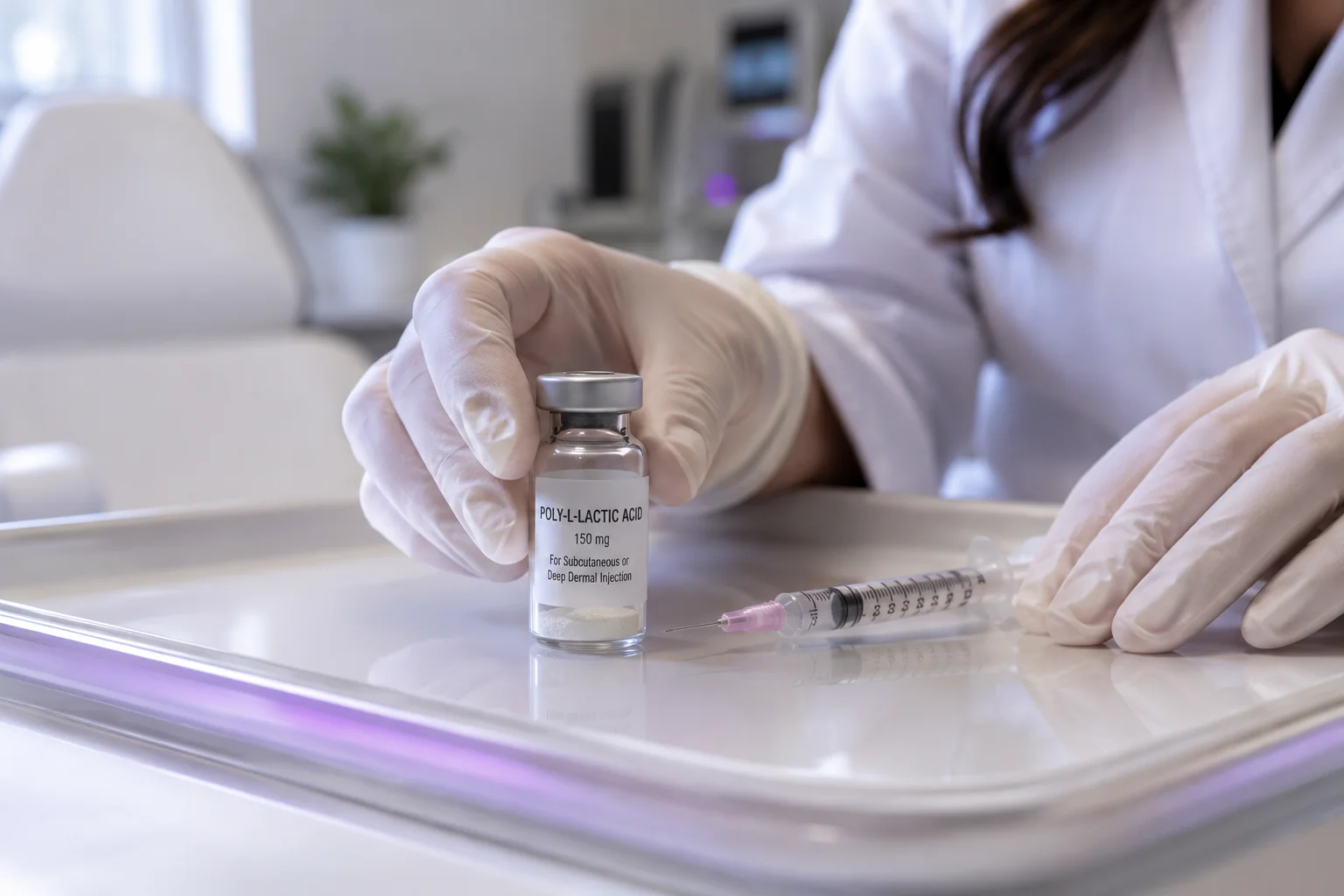
Sculptra is an FDA-approved injectable made of poly-L-lactic acid (PLLA), a biocompatible synthetic material that has been used in dissolvable surgical sutures for decades. It was originally approved in the United States in 2004 for treating facial fat loss in HIV patients and received cosmetic approval in 2009 for the correction of shallow to deep facial wrinkles and folds.
The mechanism is what sets Sculptra apart. When injected into the deeper layers of the skin, the PLLA microparticles do not act as a “filler” in the traditional sense. Instead, they trigger a controlled inflammatory response that signals your fibroblasts to produce new collagen. Over the following weeks and months, this fresh collagen rebuilds structural support beneath the skin, restoring volume in a way that mimics how your face looked years earlier.
Because Sculptra works with your body rather than as an inert material, the initial volume you see right after injection is mostly the saline carrier fluid, which absorbs within a few days. The actual cosmetic improvement develops gradually as new collagen forms. This is one of the most commonly misunderstood aspects of the treatment, and it is why the consultation conversation matters so much.
How Sculptra Works: Biostimulation vs Volumization
To understand why Sculptra differs from traditional fillers, it helps to know how the two categories actually work in the skin.
Hyaluronic acid (HA) fillers like Juvederm, Restylane, and the RHA Collection are made of a synthetic version of a sugar molecule that already exists in your skin. When injected, they physically occupy space, holding water and adding immediate volume. The improvement is visible the day of treatment, and the gel slowly breaks down over six to eighteen months depending on the product and area.
Sculptra and other biostimulators work by triggering your body to produce new collagen. The injected PLLA microparticles are gradually metabolized by your body over about two years while the collagen they stimulated continues to provide structural support. The volume you see is your own tissue, not a foreign material sitting in place.
Quick Comparison
| Feature | Sculptra (Biostimulator) | HA Fillers (Juvederm, Restylane, RHA) |
|---|---|---|
| Mechanism | Stimulates new collagen | Adds immediate volume |
| Visible results | 3 to 6 months (gradual) | Same day (instant) |
| Sessions needed | 2 to 3 (spaced 4 to 6 weeks) | 1 (touch-ups optional) |
| Duration | 2 to 3 years | 6 to 18 months |
| Reversible | No (collagen cannot be dissolved) | Yes (hyaluronidase) |
| Best for | Diffuse volume loss, structural support | Targeted lines, lips, immediate correction |
Both approaches have a place in modern cosmetic dermatology, and many patients benefit from a combination. For example, Sculptra can rebuild structural volume in the cheeks and temples while HA fillers handle marionette lines, lips, or precise contouring of the jawline.
Who Is a Good Candidate for Sculptra?
Sculptra works best for specific patient profiles. Knowing whether you fit the ideal candidate criteria helps set realistic expectations and decide whether the treatment is right for you.
Patients with diffuse facial volume loss. If you have noticed your face looking flatter or more drawn rather than having one or two specific lines, Sculptra is well-suited because it can address larger areas like the temples, cheeks, and jawline as a whole. Hyaluronic acid fillers can certainly volumize these areas too, but Sculptra often produces a more natural overall restoration when the goal is broad rebuilding rather than targeted correction.
Patients in their 40s, 50s, and 60s. Collagen production declines about 1 percent per year starting in your 20s, and the loss accelerates after menopause. Sculptra is particularly effective for patients who have entered the phase where bone resorption and fat pad shrinkage have started to noticeably change facial structure.
Patients who prefer gradual, natural-looking results. Because Sculptra builds slowly, the change is subtle enough that friends and family often comment that you look refreshed without being able to identify what you had done. If the idea of waking up looking “different” the day after a treatment makes you uncomfortable, the gradual nature of Sculptra is an advantage.
Patients seeking longer-lasting results. Sculptra results last two to three years, which is significantly longer than most HA fillers. For patients who do not want to commit to repeat treatments every six to twelve months, this longevity is a meaningful benefit.
Sculptra is generally not recommended for patients who want immediate visible results, who have active skin infections in the treatment area, who are pregnant or breastfeeding, or who have a history of keloid scarring or hypertrophic scarring at injection sites. A consultation allows our team to evaluate whether Sculptra is appropriate for your specific situation.
What to Expect: Treatment, Sessions, and Results Timeline
Sculptra treatment is structured differently from a single-syringe HA filler appointment. Understanding the timeline helps you plan and avoid disappointment in the early weeks.
The consultation. Your provider will assess your facial structure, discuss your goals, and recommend how many vials and sessions are likely needed. A typical full-face treatment plan involves two to three sessions, with each session using one to two vials of reconstituted Sculptra.
The injection appointment. Sculptra is injected with a fine needle into the deep dermis or subcutaneous tissue. The full-face treatment usually takes 30 to 45 minutes. A topical numbing cream is applied beforehand to improve comfort, and many providers also incorporate lidocaine into the Sculptra mixture itself.
Immediately after injection. You will see fullness right away because of the saline carrier fluid, but this is temporary. Within two to three days, the saline absorbs and your face will look much like it did before treatment. Some patients find this disorienting if they were not expecting it, which is why the pre-treatment conversation matters so much.
The “rule of fives” massage. After Sculptra injection, you are asked to massage the treated areas five times a day, for five minutes, for five days. This helps distribute the PLLA evenly and reduces the small risk of nodule formation.
Weeks 4 to 6. Your second session is typically scheduled around this time. You may begin to notice subtle improvement, but most of the visible change is still to come.
Months 3 to 6. This is when results become clearly visible. Friends may comment that you look well rested or healthy, often without realizing what changed. The improvement continues to develop through about month six.
Year 1 and beyond. Once full results are achieved, they typically last two to three years. Some patients schedule a single maintenance vial annually to extend the benefit.
Risks, Side Effects, and Why Injector Experience Matters
Sculptra has a strong safety profile when administered by an experienced injector, but there are important considerations that distinguish it from HA fillers.
Common short-term side effects include redness, swelling, bruising, and tenderness at the injection sites. These typically resolve within a few days. Some patients experience small bumps under the skin in the first one to two weeks, which usually settle with the recommended massage routine.
The most discussed risk with Sculptra is the formation of small nodules or papules under the skin, which can appear weeks to months after treatment. These are uncommon, generally not visible from the outside, and most resolve on their own or with massage. The risk is significantly reduced by proper reconstitution technique, correct injection depth, and patient adherence to the post-treatment massage protocol.
Unlike HA fillers, which can be dissolved with hyaluronidase if results are unwanted, Sculptra results cannot be reversed. Your body needs to metabolize the collagen over years for the effect to fade. This is why choosing an experienced provider who understands facial anatomy and the nuances of PLLA placement is more important with Sculptra than with reversible products.
“With biostimulator products like Sculptra, the experience and judgment of the injector matter even more than with traditional fillers. There is no shortcut. You need to evaluate the patient’s anatomy, plan the placement carefully, and educate the patient on what to expect at week one, week six, and month six. Done well, Sculptra produces some of the most natural-looking restoration we offer.”
Clinical team at kalon Dermatology
Cost of Sculptra in Brooklyn
Sculptra is typically priced per vial rather than per session. In the New York metro area, a single vial generally ranges from $800 to $1,200 depending on the practice. A full treatment plan of two to three sessions, each using one to two vials, brings the total investment for full-face restoration to roughly $2,400 to $7,200.
While the upfront cost can feel higher than a single syringe of HA filler, the math often favors Sculptra for patients seeking long-term volume restoration. A typical HA filler treatment plan over three years (annual touch-ups of two syringes at $700 to $1,000 per syringe) can easily reach $4,200 to $6,000, while Sculptra results from a single treatment course often last that entire window.
During your consultation, our team will provide a clear, written estimate based on your specific anatomy and goals. We also offer financing through CareCredit to help patients spread treatment across a comfortable timeline.
Sculptra at kalon Dermatology in Brooklyn
At kalon Dermatology, Sculptra is administered by board-certified dermatologists and licensed advanced injectors who specialize in facial anatomy and biostimulator placement. We offer Sculptra alongside our full menu of injectable treatments, allowing us to combine biostimulator and HA-based approaches when that produces the most natural result.
Why patients choose kalon Dermatology for Sculptra:
- Experienced injectors. Sculptra results depend heavily on injector technique. Our team trains specifically on PLLA reconstitution, depth control, and the regional anatomy that affects placement.
- Honest candidate assessment. Sculptra is not the right answer for every patient. If your goals are better served by HA fillers, non-surgical skin tightening, or a combination, we will tell you.
- Two convenient locations. We serve patients across Brooklyn, including Sheepshead Bay, Brighton Beach, Bay Ridge, and Midwood, as well as Staten Island’s North Shore.
- Comprehensive aesthetic menu. Sculptra often pairs well with Sofwave skin tightening, HA fillers for targeted lines, or Botox for dynamic wrinkles. We design integrated plans rather than treating each issue in isolation.
Our Locations
Brooklyn (Sheepshead Bay)
2792 Ocean Ave, 2nd Floor, Brooklyn, NY 11229
Mon to Thu: 10:00 AM to 6:00 PM | Fri: 9:00 AM to 3:00 PM
Staten Island (West Brighton)
796 Castleton Ave, Staten Island, NY 10310
Mon: 10:00 AM to 7:00 PM | Fri: 9:00 AM to 5:00 PM
Frequently Asked Questions About Sculptra
How is Sculptra different from Juvederm or Restylane?
Juvederm and Restylane are hyaluronic acid (HA) fillers that physically add volume the day of treatment and break down within six to eighteen months. Sculptra is a biostimulator that triggers your own collagen production over several months and lasts two to three years. HA fillers can be dissolved if needed; Sculptra cannot. Many patients use both products in combination for different goals.
How many Sculptra sessions will I need?
Most full-face treatment plans involve two to three sessions spaced four to six weeks apart. Patients with significant volume loss may need three sessions; patients with mild to moderate loss may achieve their goals in two. Your provider will give you a specific estimate at consultation based on your anatomy and goals.
When will I see Sculptra results?
Subtle changes may be visible within four to six weeks, but most of the cosmetic improvement develops over three to six months as new collagen forms. The “instant” fullness you see the day of injection is just the saline carrier fluid and absorbs within a few days, which is normal and expected.
How long does Sculptra last?
Sculptra results typically last two to three years, which is among the longest-lasting injectable options available. Some patients extend their results with an annual maintenance vial.
Does Sculptra hurt?
Most patients describe the injections as mild to moderate discomfort. We apply topical numbing cream before treatment, and lidocaine is often mixed into the Sculptra solution itself. The discomfort is similar to or less than HA filler treatments in the same areas.
Is there downtime after Sculptra?
Sculptra has minimal downtime. Mild swelling, redness, or bruising at injection sites typically resolves within a few days. Most patients return to normal activities the same day. You will be asked to massage the treated areas five times a day for five days as part of post-treatment care.