


Medical Dermatology
Psoriasis Treatment in Brooklyn and Staten Island
For psoriasis that keeps coming back. We build a long-term plan instead of chasing flares, and step up to biologics that target the cause when topicals are not enough.
"I had an itchy and red area on the back of my neck for two years and none of the dermatologists could help me, I came in and they took a picture, they sent analysis to the lab and prescribed me a cream. She was so patient while I was explaining asked me multiple questions. After doing the cream it went away."
On This Page
Quick Facts
At a Glance
Condition
Chronic autoimmune skin disease with thick, scaly plaques
Common Types
Plaque, guttate, inverse, pustular, and erythrodermic
Provider
Dr. David Biro, MD, PhD, board-certified dermatologist
Diagnosis
Clinical skin exam, sometimes confirmed with a small punch biopsy
Treatments
Topicals, phototherapy, oral systemics, and biologics (TNF, IL-17, IL-23 inhibitors)
When to Seek Care
Spreading plaques, joint pain, persistent itch, or scalp involvement
Find Your Path
Is Your Psoriasis a Match for kalon Care?
Match your psoriasis concern to the right kalon care pathway
This Concern Match is informational, not medical advice. Psoriasis presentation, severity, and treatment response vary by individual. Schedule a dermatology consultation for diagnosis and a personalized plan.
Psoriasis
Psoriasis is a chronic autoimmune skin condition that benefits from ongoing medical care to improve the health of your skin and reduce flare-ups. At kalon Dermatology, expert providers create personalized plans for psoriasis for Brooklyn and Staten Island residents to help keep the condition under control. Call the office or schedule your psoriasis consultation online today.
What is psoriasis?
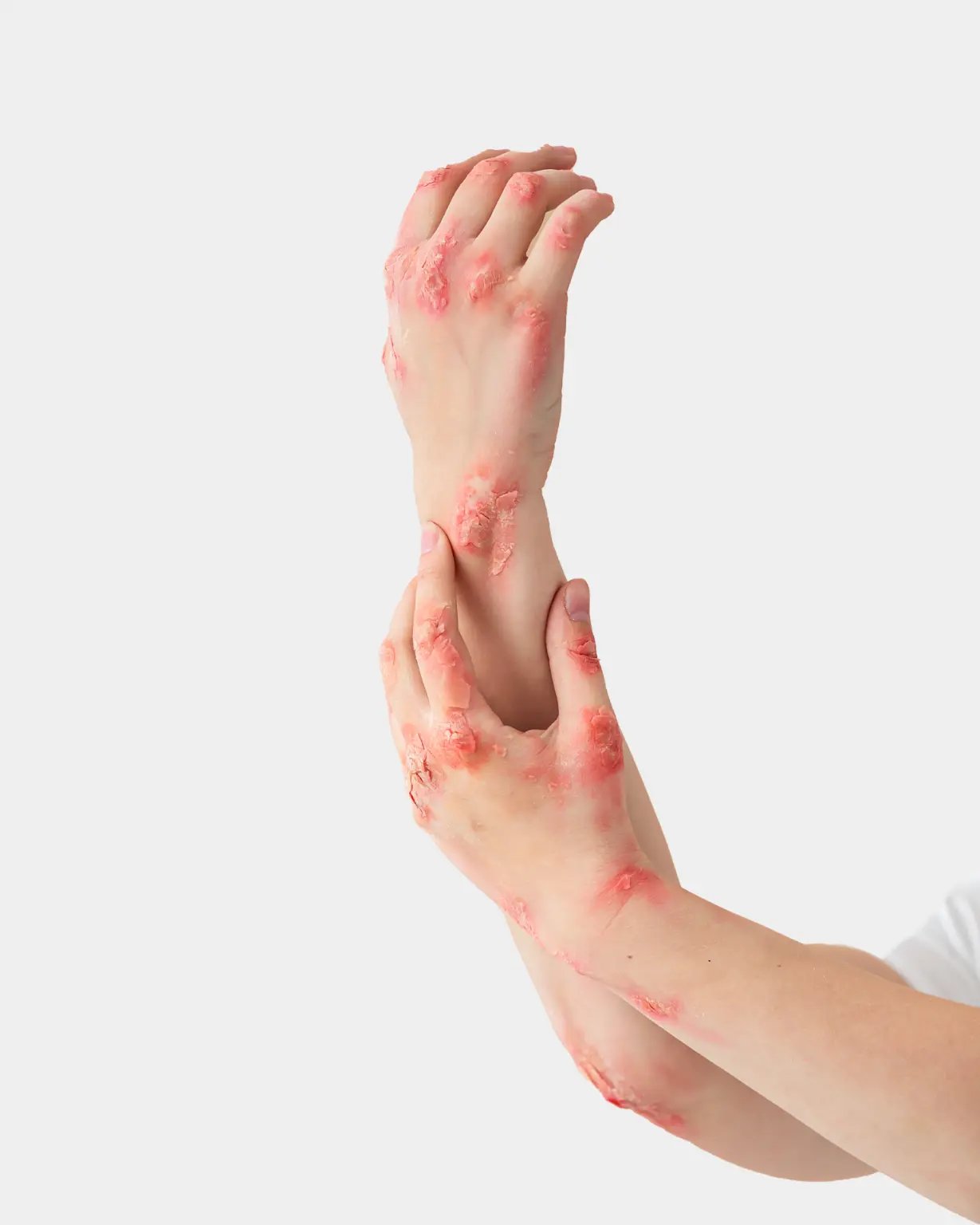
Psoriasis is a skin condition that occurs when there’s an overproduction of skin cells, leading to thick, scaly, itchy patches of skin. Normally, your skin replaces old cells with new cells every few weeks. But with psoriasis, your body makes new skin cells every few days.
The overproduction of skin cells occurs because of an immune system malfunction that triggers the skin cells to grow at a more rapid rate, making psoriasis an autoimmune skin condition.
What are the types of psoriasis?
There are many types of psoriasis that can affect different parts of the body. Some of these types include:
Plaque psoriasis
Plaque psoriasis is the most common type, causing raised, red plaques covered with white scales. You can have plaque psoriasis and another type of the autoimmune skin condition.
Inverse psoriasis
Inverse psoriasis causes a flat, red, and painful rash in the folded areas of the skin, like under the arms or in the groin area.
Sebopsoriasis
Sebopsoriasis is a type of psoriasis that affects the scalp, causing a scaly or crusty scalp.
Nail psoriasis
Nail psoriasis causes discoloration and pitting in the fingernails and toenails.
Psoriatic arthritis is also a type of psoriasis that causes joint inflammation and pain.
What can I expect during a psoriasis evaluation?
You can expect a patient-centered exam when you visit kalon Dermatology for a psoriasis evaluation. Your provider asks detailed questions about your symptoms and medical history. They also ask about your family history since psoriasis tends to run in families.
Your provider examines your skin and may take a sample of your rash to confirm or rule out psoriasis.
If your plaques keep returning after every cream, we map a long-term plan instead of chasing flares. Beyond topicals and phototherapy, your dermatologist can step up to oral systemics or biologics that target the specific immune pathways behind psoriasis, including the TNF, IL-17, and IL-23 inhibitors. If you also have joint pain, we screen for psoriatic arthritis, since some biologics treat both.
What are the treatments for psoriasis?
Your provider at kalon Dermatology talks to you about your psoriasis and the treatments that may help keep your skin condition under control, They customize your plan based on psoriasis type and the severity of your symptoms.
Treatment for psoriasis may include:
Stress may trigger your skin condition, and your provider may also talk to you about stress management to reduce flare-ups.
kalon Dermatology offers specialized care for psoriasis for Brooklyn and Staten Island residents. They create personalized treatment plans to help you manage your skin condition effectively. So, c all kalon Dermatology or schedule your consultation online today.
Patient Reviews
What Our Patients Say
Excellent doctor, excellent stuff. I recommend this office to my relatives and friends.
Alexander S.
Google Review
I’ve been to multiple Dermatology offices to help me with my skin concern. There is no one else I’d trust more now that I’ve been to Kalon Dermatology. The staff is polite and caring. The team took the time to go over all my treatment options and I’ve finally found the help I needed. I highly recommend this Dermatology office and will be recommending and returning with my family.
Gabi D.
Google Review
Love the friendly staff and great doctors here. Highly recommend 10/10 great results
Laura C.
Google Review
Danny is a very good doctor. Very knowledgeable, caring and attentive.
crispy P.
Google Review
Loved my experience here. Such knowledgeable providers and have a good bed side manner. The office is beautiful and most importantly very clean.
Nelly K.
Google Review
This place is absolutely amazing! From the staff, to the reception area to the treatments. I see Danny bronshtein for my injections and my skincare needs. He’s very thorough and attentive and sweet to boot. Can’t recommend them enough!
elle G.
Google Review
Good to Know
Frequently Asked Questions
Expertise You Can Trust
Meet Our Expert Team
More than 75 years of combined dermatology and medical experience. Click any provider to read their background.
Reviewed by David Biro, MD, PhD
kalon Dermatology, a dermatologist in Brooklyn and Staten Island, sees patients in Sheepshead Bay, Bay Ridge, and Staten Island.
Disclaimer: This information is provided for educational purposes and is not a substitute for professional medical advice, diagnosis, or treatment. Please schedule a consultation with our team to discuss your individual needs.
Start Here
Reveal Your Best Self
Book your consultation today and learn how our experienced team can support your skin care goals.