
Hair conditioner tube on cream surface beside healthy dark hair, eucalyptus leaves, plumeria flower, and a few loose hair strands, dermatology blog header

Does Conditioner Cause Hair Loss? (No, But These Ingredients Do)

Medically reviewed by Dr. David Biro, MD, PhD, Board-Certified Dermatologist, kalon Dermatology  |  25+ Years Experience  |  Last Updated: May 2026

No, conditioner does not directly cause hair loss. Most modern conditioners are formulated to coat the hair shaft, reduce breakage, and improve manageability. The confusion comes from a different problem: conditioners can contain ingredients that irritate the scalp, weigh hair down, or build up over time, and people often confuse breakage from improper use with true hair loss from the follicle. The real culprits behind shedding are usually genetics, hormones, stress, nutrition, or scalp inflammation, not the conditioner itself. This guide covers what conditioner actually does to hair, the specific ingredients to avoid (sulfates, silicones, formaldehyde-releasers), and when shedding is a sign you should see a dermatologist.

What Does Conditioner Actually Do to Your Hair?

Conditioner works on the hair shaft, not the follicle. To understand whether conditioner can cause hair loss, you have to understand what it is doing in the first place.

Each strand of hair is a structure made of keratin protein, surrounded by overlapping cuticle scales. When the cuticle is smooth, hair feels soft, looks shiny, and resists breakage. When shampoo strips natural oils or chemical processing damages the cuticle, those scales lift up, hair tangles, and strands snap mid-length. Conditioner deposits a thin layer of cationic surfactants, fatty alcohols, silicones, and oils that smooth the cuticle back down, replenish moisture, and reduce friction during combing.

  • Cuticle smoothing: reduces tangle and breakage during brushing
  • Moisture replenishment: rehydrates the cortex after shampoo strips natural oil
  • Slip and detangling: minimizes mechanical pulling that snaps fragile strands
  • pH balancing: closes raised cuticles and seals the hair shaft
  • Static and frizz reduction: coats the strand to repel humidity

None of those mechanisms reach the hair follicle, the only place true hair loss originates. Conditioner can affect how your hair looks and how much breakage you experience while brushing or styling, but it cannot change whether your follicle decides to keep producing a strand. That decision lives several millimeters below the scalp surface, in cells the conditioner never touches.

Can Conditioner Cause Hair Loss: Understanding Its Role

Hair conditioners are designed to nourish and protect the hair, but their relationship with hair loss is often misunderstood. Most conditioners are safe to use, but improper application or harsh ingredients can contribute to hair fall by causing scalp issues, clogged follicles, or product buildup. Choosing the right conditioner and using it correctly is essential to maintain healthy hair.

“When patients tell me their conditioner is causing hair loss, I almost always find the real cause is something else: telogen effluvium from a stressful event, androgenetic thinning that started slowly, or a scalp condition like seborrheic dermatitis that the patient blamed on a product. Conditioner gets unfairly accused. The fix is rarely changing the bottle, it is checking the scalp and the bloodwork.”

, Dr. David Biro, MD, PhD, Board-Certified Dermatologist, kalon Dermatology

Why Does It Look Like Conditioning Causes Hair Loss?

Many people believe conditioner is the cause of hair loss, but this is usually because they confuse normal shedding with breakage or mistake the slipperiness of conditioned hair for excess loss.

  • Normal shedding: Losing 50 to 100 hairs a day is completely normal. When you condition wet hair, those already-detached strands slide off easily, making the loss seem dramatic in the shower.
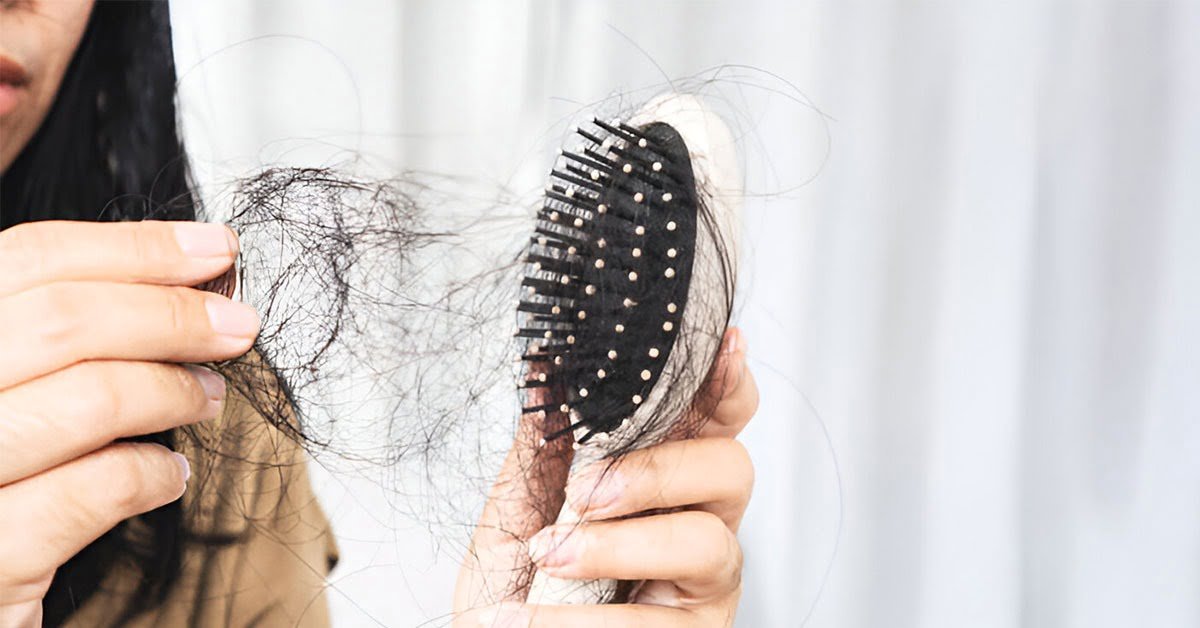
  • Breakage vs loss: If your hair is breaking mid-shaft from heat, chemical processing, or rough brushing, you will see short broken pieces, not full-length strands with the white bulb at the end. Real hair loss strands have the bulb. Breakage strands do not.
  • Wet hair fragility: Hair is at its weakest when wet. Aggressive towel drying, tight elastics, or harsh detangling on wet hair causes mechanical breakage that gets blamed on the conditioner.

Compounds to Avoid in Hair Conditioners

While most conditioners are safe, certain compounds have been associated with scalp irritation, follicle clogging, or longer-term hair damage. Read the ingredient label and avoid:

  • Sulfates (SLS, SLES): Common in shampoos but sometimes appear in conditioners. Strip the scalp of natural oils, can cause dryness and irritation.
  • Silicones (dimethicone, cyclopentasiloxane): Provide instant smoothness but build up over time, weighing hair down and potentially blocking follicles when transferred to the scalp.
  • Formaldehyde-releasing preservatives (DMDM hydantoin, quaternium-15, imidazolidinyl urea): Linked to scalp irritation and shedding in sensitive users; banned or restricted in several jurisdictions.
  • Parabens: Endocrine-disrupting potential at high exposure; many brands have moved away from them.
  • Synthetic fragrances: Can trigger contact dermatitis in sensitive scalps. “Fragrance” or “parfum” on the label can hide dozens of compounds.
  • Drying alcohols (isopropyl, propanol, ethanol): Strip moisture, opposite of what a conditioner should do.

Is Conditioner Bad for Your Scalp? (vs. Bad for Your Hair)

Hair and scalp care are not the same thing, and a product that is fine for your hair shaft can still be wrong for your scalp.

Conditioner is designed to coat the strand, not feed the follicle. When conditioner sits directly on the scalp, the heavy emollients and silicones can trap sebum, dead skin cells, and product residue against the skin. Over time, this creates a film that can clog follicles, encourage yeast overgrowth (a contributor to seborrheic dermatitis and dandruff), and trigger scalp itch. The hair itself stays soft, but the scalp becomes inflamed, and inflammation is a real driver of shedding.

  • For most adults: apply conditioner from mid-shaft to ends only. Keep it off the roots.
  • Exception, dry or curly hair: a small amount of lightweight conditioner massaged briefly into the scalp can be helpful, then rinsed thoroughly.
  • Warning signs: persistent itch, flakes, redness, or a greasy feel at the scalp within hours of washing usually point to product buildup. Switch to a lightweight clarifying routine and reassess.

Leave-In Conditioner: Different Rules Apply

Leave-in conditioners are not rinsed out, so they sit on the hair and scalp for hours or days at a time. The longer contact time changes the risk profile.

  • Watch for buildup: heavy leave-ins applied daily can accumulate on the scalp faster than rinse-out conditioners. If you use one daily, do a clarifying wash once a week.
  • Avoid the scalp entirely: leave-ins should be applied to damp hair from mid-shaft to ends, not roots.
  • Sensitive-scalp formulations exist: if you have a tendency toward dandruff or seborrheic dermatitis, look for fragrance-free, silicone-free leave-ins or skip them entirely.
  • True hair loss from leave-in: rare and almost always tied to scalp inflammation, not the conditioner itself.

Does Not Using Conditioner Cause Hair Loss?

Skipping conditioner does not cause hair loss at the follicle level, but it can cause significant breakage that mimics loss. Hair washed with shampoo alone, especially one with sulfates, has lifted cuticles, more friction, and more snapping during brushing. Over weeks or months, this leads to thinner-looking hair, split ends, and shorter strands, which is often confused with hair loss.

If you have textured, color-treated, dry, or chemically processed hair, conditioner is a protective layer your hair likely needs. If you have very fine, oily, straight hair, you can sometimes get away with less frequent or lighter conditioning, but rarely none at all.

Can Too Much Conditioner Cause Hair Loss?

Overusing conditioner does not directly cause hair loss, but it can create the conditions that make hair appear to fall out and the scalp environment that contributes to inflammation-driven shedding.

  • Buildup at the follicle: repeated heavy conditioning, especially with silicone-rich products applied to the roots, leaves a film around the follicle opening. Trapped sebum and dead skin cells then encourage yeast overgrowth and scalp inflammation.
  • Limp, weighed-down strands: too much conditioner makes hair look flat and thin without actual hair loss. Once you clarify, the volume returns.
  • Allergic contact dermatitis: repeated exposure to fragrance or preservative ingredients can sensitize the scalp over time, leading to itch, redness, and shedding.

The fix: condition mid-shaft to ends only, two to four times a week for most hair types, with a clarifying shampoo once a week to reset the scalp.

How to Use A Conditioner the Right Way?

  1. Shampoo first, then condition: always remove dirt and oil before applying conditioner so it can coat clean strands.
  2. Apply mid-shaft to ends: keep the product off the scalp unless you have very dry or curly hair that needs scalp moisture.
  3. Leave it for two to three minutes: long enough for the cuticle to absorb the moisture, short enough to avoid buildup.
  4. Rinse thoroughly: incomplete rinsing is a top cause of buildup and scalp issues.
  5. Cool-water final rinse: seals the cuticle and adds shine.
  6. Pat dry, do not rub: wet hair is fragile, towel-rubbing causes the breakage that gets blamed on conditioner.

Tips to Use Hair Conditioners

  • Match the conditioner to your hair type: fine hair needs lightweight formulas, curly or color-treated hair needs richer, deeper conditioning.
  • Switch products if your scalp gets itchy or flaky: ingredient sensitivity is real and persists until you remove the trigger.
  • Use a wide-tooth comb on conditioned wet hair: minimizes breakage during detangling.
  • Do a deep conditioning treatment weekly: for chemically treated or heat-styled hair, this protects against breakage.
  • Read the label: avoid the ingredient flags listed in the section above.

The Best Conditioners FOR Hair Loss (When Your Hair Is Already Thinning)

If you are already experiencing hair loss or thinning, the right conditioner can support what is left and reduce mechanical breakage. The wrong one can accelerate the appearance of thinning. Look for these features.

  • Lightweight, non-build-up formulas: avoid heavy silicones and butters that weigh thinning hair down. Look for “volumizing” or “thickening” labels with water-soluble ingredients.
  • Caffeine-infused conditioners: caffeine has been studied for its potential to extend the anagen (growth) phase when in contact with the scalp.
  • Saw palmetto and pumpkin seed oil: natural ingredients with some evidence for blocking DHT, though topical effect is modest.
  • Biotin and niacinamide: support keratin production and scalp microcirculation when included as bioavailable forms.
  • Peppermint and rosemary essential oils: small studies suggest improved scalp circulation, comparable to low-dose minoxidil for some users.
  • Ketoconazole-based conditioners (over the counter or prescription): often used for seborrheic dermatitis, with secondary anti-androgen effects on the scalp.

Important reality check: conditioner is a supportive tool, not a hair-loss treatment. If you have visible thinning, the heavy lifting comes from medical treatments like minoxidil, finasteride or dutasteride, in-office procedures like Alma TED Hair Restoration, PRP, or exosome therapy. The right conditioner is what you use alongside those treatments to protect the strands you have. Our team at kalon Dermatology builds combination plans that include both medical and cosmetic care.

What Is Causing Hair Loss?

If you are losing more than 100 hairs a day or noticing visible thinning, the cause is almost certainly not your conditioner. Real hair loss has a small list of common drivers, each with a different treatment path.

  • Androgenetic alopecia (genetic): the most common cause in both men and women. Pattern thinning at the crown, temples, or part line. Treatment: minoxidil, finasteride or dutasteride, PRP, Alma TED.
  • Telogen effluvium (stress-related): diffuse shedding 2 to 4 months after a stressor (illness, surgery, childbirth, weight loss, severe stress). Usually resolves on its own with support.
  • Hormonal: thyroid disorders, postpartum, perimenopause. Bloodwork identifies and treatment addresses the underlying cause.
  • Nutritional: iron deficiency, low ferritin, vitamin D deficiency, severe caloric restriction. Replacing the missing nutrient typically resolves shedding within 4 to 6 months.
  • Scalp conditions: seborrheic dermatitis, psoriasis, alopecia areata. Treating the scalp condition resolves the shedding.
  • Medications and treatments: chemotherapy, certain antidepressants, blood pressure medications, hormonal birth control changes.

If you suspect you have androgenetic alopecia or any of the conditions above, a board-certified dermatologist like Dr. David Biro can identify the cause through scalp examination and bloodwork, then build a treatment plan.

Frequently Asked Questions

Is conditioner bad for your hair?

No, the right conditioner is good for your hair. It smooths the cuticle, reduces breakage, and replaces moisture lost during shampooing. The wrong conditioner, or the right one used poorly, can cause buildup, scalp irritation, and the appearance of thinning. Match the formula to your hair type and apply mid-shaft to ends, not the scalp.

Does conditioner damage hair?

Properly used conditioner protects hair from damage, it does not cause it. Conditioners with harsh sulfates, formaldehyde-releasing preservatives, or excessive drying alcohols can compromise the hair shaft over time. The simplest fix is reading the label and avoiding the flagged ingredients.

Why does my hair fall out when I use conditioner?

What you are seeing in the shower is most often normal daily shedding (50 to 100 hairs) becoming visible at once because conditioned wet hair is slippery. Real hair loss strands have a small white bulb at the root end. If your shed strands are mostly bulb-bearing and you are losing more than 100 a day, see a dermatologist for a scalp exam.

Should I put conditioner on my scalp or just the hair?

For most people, apply conditioner only from mid-shaft to ends. Conditioner on the scalp can cause buildup, clog follicles, and trigger scalp inflammation in sensitive users. The exceptions are very dry, curly, or coily hair types, where a small amount of lightweight conditioner can be massaged briefly into the scalp and rinsed thoroughly.

What is the best conditioner for thinning hair?

For thinning hair, look for lightweight, water-soluble formulas without heavy silicones, marketed as “volumizing” or “thickening.” Caffeine-infused, saw palmetto, biotin, peppermint, or rosemary oil ingredients can offer modest benefit. Conditioner alone will not regrow hair, the actual treatment for thinning is medical (minoxidil, finasteride, in-office Alma TED or PRP). Conditioner is a supportive tool that protects the hair you still have.

Can leave-in conditioner cause hair loss?

Leave-in conditioner does not cause hair loss at the follicle, but daily use of heavy leave-ins can lead to scalp buildup, clogged follicles, and inflammation-driven shedding. Apply leave-in to damp hair mid-shaft to ends, never on the scalp, and clarify with a deep cleansing shampoo once a week. If your scalp is itchy, flaky, or sensitive, switch to a fragrance-free, silicone-free formula or skip leave-ins entirely.

kalon Dermatology: Reduce Hair Fall with Expert Treatment

At kalon Dermatology, we provide advanced dermatological care across our Brooklyn, Bay Ridge, and Staten Island locations. With over 60 years of combined experience, our team delivers personalized and compassionate care for every patient. If you are experiencing hair fall, thinning, or scalp concerns, our board-certified dermatologists offer comprehensive evaluations and personalized treatment plans, from medical prescriptions to in-office Alma TED Hair Restoration, exosome therapy, and PRP. Contact us today to schedule a consultation and learn how we can help you achieve healthy, fuller hair.

Medical Disclaimer: This article is for informational purposes only and is not a substitute for professional medical advice, diagnosis, or treatment. Always consult with a qualified healthcare provider regarding any medical concerns.

Concerned about hair loss?

The board-certified team at kalon Dermatology can help. We serve patients in Brooklyn, Bay Ridge, and Staten Island with personalized medical and cosmetic dermatology care.

Call (833) 635-2566 or schedule a consultation online.