
Medically reviewed by Dr. David Biro, MD, PhD – Board-Certified Dermatologist | 30+ Years Experience | Last Updated: March 2026
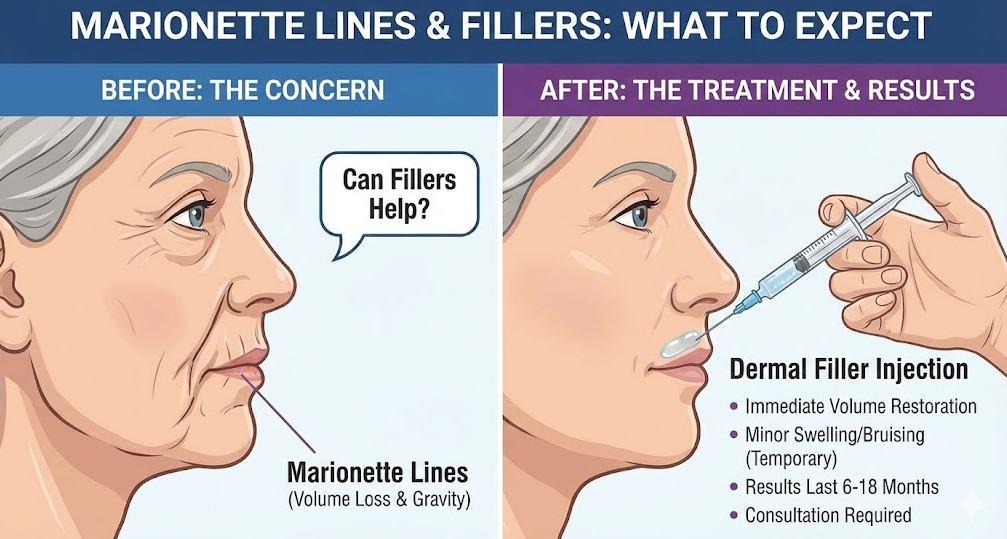
Yes, dermal fillers are one of the most effective treatments for marionette lines. These lines run from the corners of your mouth down toward your chin, often creating a sad or tired appearance. Fillers restore lost volume in the lower face, lifting the corners of the mouth and softening these downward lines. Results are visible immediately and typically last 9 to 12 months.
What Are Marionette Lines?
Marionette lines are the vertical creases that extend from the corners of your mouth downward toward your jawline. They get their name from marionette puppets, which have similar lines where the movable mouth piece attaches. You may also hear them called puppet lines or melomental folds.
These lines typically become noticeable in your 40s and deepen with age. They can make you look like you are frowning or upset even when your face is relaxed. Many people find that marionette lines make them appear older or more tired than they feel.
Marionette Lines vs. Nasolabial Folds: What Is the Difference?
Marionette lines and nasolabial folds are often confused because they are both located in the lower face, but they are in different positions.
Nasolabial folds (smile lines) run from the sides of your nose down to the corners of your mouth.
Marionette lines start at the corners of your mouth and extend downward toward your chin.
Many patients have both and choose to treat them together for comprehensive lower face rejuvenation. Your provider can assess your facial anatomy and recommend the best approach for your concerns.
What Causes Marionette Lines?
Marionette lines develop primarily due to volume loss and changes in skin structure as we age. The main causes include:
Loss of Facial Volume: As we age, we lose fat in the cheeks and mid face. This causes the skin to sag downward, creating and deepening marionette lines.
Decreased Collagen and Elastin: These proteins keep skin firm and elastic. As production slows with age, skin loses its ability to bounce back.
Gravity: Over time, gravity pulls facial tissues downward, contributing to the formation of lines and folds.
Sun Damage and Lifestyle Factors: UV exposure, smoking, and other factors can accelerate collagen breakdown and worsen marionette lines.
Because volume loss is a primary cause, dermal fillers that restore volume are particularly effective at treating marionette lines.
How Do Fillers Treat Marionette Lines?
Dermal fillers treat marionette lines by replacing lost volume in the lower face. When filler is injected into and around the marionette lines, it physically lifts the skin and softens the crease. The result is a smoother transition from mouth to chin and a reduction in the downturned appearance.
“The usual approach is to make it as natural and appealing as possible,” explains the kalon Dermatology team. The goal is not to eliminate every line, but to soften them so you look refreshed rather than frozen or overdone.
Your provider may also recommend treating the cheeks or jawline along with the marionette lines. Restoring volume higher in the face can provide lift that reduces the downward pull causing these lines. A comprehensive approach often produces the most natural results.
What Results Can You Expect?
Results from marionette line filler are visible immediately after treatment. You will see softer lines and a lifted appearance at the corners of your mouth right away. Some initial swelling is normal and will subside over the first few days, with final results settling within one to two weeks.
Many patients notice that their resting expression looks happier and more relaxed after treatment. The downturned corners that can create a frowning appearance are lifted, giving the face a more pleasant, approachable look.
Results depend on the severity of your marionette lines and how much filler is used. Deep lines may require more product for optimal correction. Your provider will discuss realistic expectations during your consultation.
How Long Does Marionette Line Filler Last?
Marionette line filler typically lasts 9 to 12 months. The lower face has moderate movement from talking and facial expressions, which gradually breaks down the filler over time.
“Fillers on the face and other areas may last eight months up to a year,” notes the kalon Dermatology team. Some patients find their results last even longer depending on the filler used and their individual metabolism.
Most patients return for touch up treatments once or twice a year to maintain their results. Regular maintenance often requires less filler than the initial treatment, as some volume is retained between sessions.
What Happens During Treatment?
Marionette line filler is a quick, in office treatment that typically takes 20 to 30 minutes. Here is what to expect:
Consultation: Your provider examines your facial anatomy, discusses your concerns, and creates a customized treatment plan. They will determine how many syringes you need based on the depth of your lines.
Preparation: The treatment area is cleaned and a topical numbing cream is applied for comfort. Most fillers also contain lidocaine to minimize discomfort during injection.
Injection: Your provider injects the filler into the marionette lines and surrounding areas using a fine needle or cannula. They may also treat the jawline or chin area for comprehensive improvement.
Review: You can see your results immediately. Your provider reviews aftercare instructions and schedules any follow up appointments.
Is Marionette Line Filler Painful?
Most patients describe marionette line filler as mildly uncomfortable rather than painful. The lower face is more sensitive than some areas, but numbing cream and the lidocaine in most fillers significantly reduce discomfort.
You may feel some pressure or a pinching sensation during injection. The entire treatment takes only 20 to 30 minutes, and any discomfort is brief. If you are concerned about pain, talk to your provider about additional numbing options.
What Is Recovery Like?
There is minimal downtime after marionette line filler. Most patients return to their normal activities immediately. However, you may experience some temporary side effects:
Swelling: Mild to moderate swelling is common and typically resolves within a few days.
Bruising: Some patients experience bruising at the injection sites, which can last up to a week. Makeup can be applied after 24 hours to cover any discoloration.
Tenderness: The treated area may feel tender for a day or two.
Your provider will give you specific aftercare instructions. Generally, avoid strenuous exercise for 24 to 48 hours, stay out of extreme heat, and avoid pressing or massaging the treated area unless directed.
Which Fillers Work Best for Marionette Lines?
Several dermal fillers effectively treat marionette lines. Your provider will recommend the best option based on the depth of your lines and your desired results.
“We use both. We have the hyaluronic base, which is RHA, and the non hyaluronic base, which is Radiesse. We also stock Versa,” says the kalon Dermatology team.
Hyaluronic Acid Fillers (Juvederm, Restylane, RHA, Versa): These versatile fillers are the most common choice. They provide natural looking results, can be adjusted during treatment, and can be dissolved if needed. Different formulations offer varying levels of thickness for mild to deep lines.
Radiesse: This calcium hydroxylapatite filler provides immediate volume and stimulates your body to produce collagen over time. It works well for moderate to deep marionette lines and can last 12 months or longer.
Marionette Line Treatment at kalon Dermatology
At kalon Dermatology, our experienced team provides personalized dermal filler treatments for marionette lines and other signs of facial aging. With over 60 years of combined experience, our board certified dermatologists and skilled providers deliver natural looking results that help you look refreshed, not overdone.
Our team includes Dr. David Biro, a board certified dermatologist named one of New York’s Top Doctors, and Dr. Michael Gladstein, a Castle Connolly Top Doctor with nearly three decades of experience. Every treatment begins with a thorough consultation to understand your goals and create a customized plan.
We offer a range of dermal fillers including RHA, Versa, and Radiesse to address marionette lines of all depths. Our Brooklyn (Sheepshead Bay) and Staten Island locations serve patients throughout the New York City area.
Contact kalon Dermatology today to schedule your consultation and learn how marionette line filler can help restore a more youthful, refreshed appearance.
Frequently Asked Questions
How much filler do I need for marionette lines?
Most patients need one to two syringes for marionette lines, though deeper lines may require more. Your provider will assess your facial anatomy during your consultation and recommend the right amount for natural looking results.
How much does marionette line filler cost?
The cost depends on how many syringes you need and which filler is used. During your consultation, your provider will give you a personalized quote based on your treatment plan.
Can I combine marionette line filler with other treatments?
Yes. Many patients treat marionette lines along with nasolabial folds for comprehensive lower face rejuvenation. Cheek filler can also enhance results by providing lift to the mid face. Botox may be added to address crow’s feet, forehead lines, or frown lines in the same visit.
At what age should I get marionette line filler?
There is no specific best age. Marionette lines typically become noticeable in your 40s, but some people see them earlier or later. The right time to consider treatment is when these lines bother you enough that you want to address them.
Will marionette line filler look natural?
When performed by an experienced provider, marionette line filler looks very natural. The goal is to soften lines and lift the corners of your mouth, not to eliminate all lines or freeze your expression. You will still look like yourself, just more refreshed.
What if I do not like my marionette line filler results?
If you receive hyaluronic acid filler and are unhappy with the results, the filler can be dissolved with an enzyme called hyaluronidase. This provides a safety net that non hyaluronic acid fillers do not offer. Your provider can discuss this option during your consultation.
Disclaimer
Medically reviewed by Danny Bronshtein, NP-C, MSN
This content is for educational purposes only and is not intended as medical advice, diagnosis, or treatment. Please consult a qualified healthcare provider for personalized recommendations.