

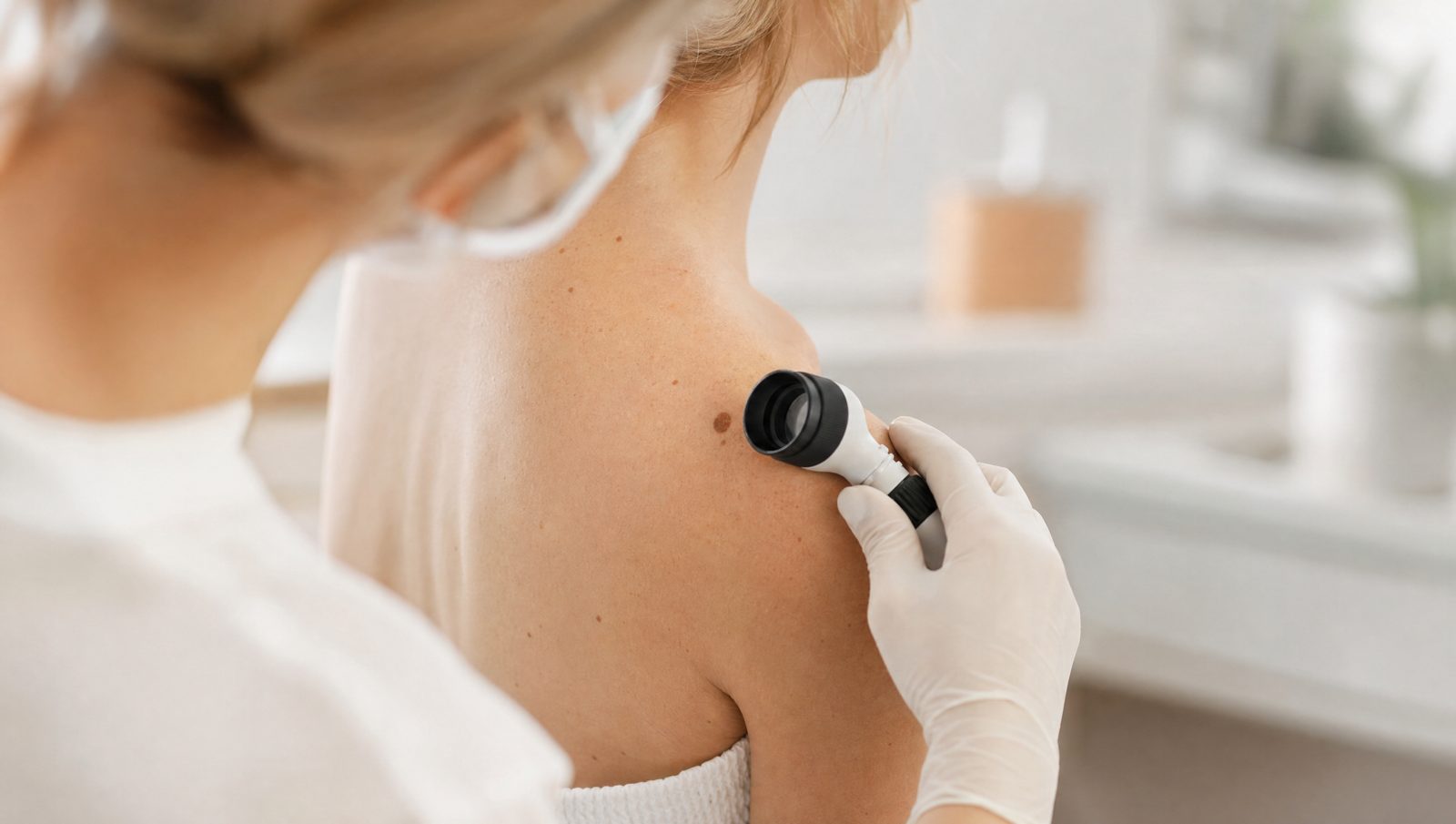
Dysplastic nevi are atypical moles whose appearance is different from that of a common ordinary mole. Most adults have at least a few common moles, and an ordinary one keeps the same size, shape and color from month to month. Dysplastic nevi tend to be larger than ordinary moles and have a for more irregular border. They can present in many different colors, therefore are difficult to properly identify. Those affected by dysplastic nevi are generally at a much higher risk for melanoma, often 10 to 12 times more likely to develop skin cancer later in life. The more moles, the higher the risk.
Causes The most likely cause of dysplastic nevi is heredity. These atypical moles tend to be passed on through the generations and are more likely to occur in fairer skinned Caucasians than any other race.
Warning Signs Melanoma is one of the deadliest forms of skin cancer, most often appears as an asymmetrical, irregularly bordered, multicolored or tan/brown spot or growth that continues to increase in size over time. Early stage Dysplastic nevi, and melanoma are often indistinguishable and therefore those with these atypical moles must get them examined often. Certain features of the moles like itching, pain, elevation, bleeding, crusting, oozing, swelling, persisting open sores, or bluish-black color are indicative of moles that may lead to melanoma. Our dermatologists will use a system of identification to judge the dangers behind each case of dysplastic nevi:
If you have any moles of discolorations that exhibit any or all of these signs you should schedule in appointment immediately as you may be suffering from melanoma-causing dysplastic nevi.
Treatment If we identify your moles to be highly atypical a biopsy will likely be necessary to check for cancers. A part of the moles will be cut and removed, then examined under a microscope. Generally whether these nevi are cancerous or not they will always pose such a risk, therefore regular testing should be done. In addition it may be prudent to remove these dysplastic nevi completely to reduce the risk of melanoma later on in life.
Expertise You Can Trust
Meet Our Expert Team
More than 75 years of combined dermatology and medical experience. Click any provider to read their background.
Disclaimer: This information is provided for educational purposes and is not a substitute for professional medical advice, diagnosis, or treatment. Please schedule a consultation with our team to discuss your individual needs.
Start Here
Reveal Your Best Self
Book your consultation today and learn how our experienced team can support your skin care goals.