
Medically reviewed by Dr. David Biro, MD, PhD – Board-Certified Dermatologist | 30+ Years Experience | Last Updated: March 2026
The most effective non-surgical treatments for loose skin after weight loss are ultrasound skin tightening (Sofwave, Ultherapy), radiofrequency treatments (Morpheus8, Thermage), and combination therapies that stimulate collagen production. These treatments work best for mild to moderate skin laxity on the face, neck, and body. Results develop over three to six months as your body produces new collagen to tighten and firm the skin.
If you have worked hard to lose weight and now feel frustrated by loose, sagging skin, you are not alone. Many people who achieve significant weight loss find themselves dealing with excess skin that does not bounce back the way they hoped. This can be discouraging after all your effort. The good news is that non-surgical treatments can help tighten loose skin and restore a firmer appearance, especially on the face and neck where results are often most noticeable.
Why Skin Becomes Loose After Weight Loss
Understanding why your skin is loose helps explain which treatments will work best for your situation.
Skin stretches to accommodate weight gain. When you carry excess weight, your skin expands to make room. The longer you carry that weight, the more the skin’s support structure adapts to the larger size.
Collagen and elastin become damaged. The proteins that keep skin firm and elastic (collagen and elastin) can become damaged when skin is stretched significantly. This damage makes it harder for skin to snap back after weight loss.
Rapid weight loss does not give skin time to adjust. When you lose weight quickly, whether through diet, exercise, or bariatric surgery, your skin does not have time to gradually contract. Slow, steady weight loss gives collagen and elastin more opportunity to adapt.
Age affects skin’s ability to recover. Younger skin produces more collagen and has better elasticity. Patients over 40 may find that their skin does not retract as readily after weight loss compared to younger patients.
The amount of weight lost matters. Generally, the more weight you have lost, the more likely you are to have loose skin. Patients who lose 100 pounds or more typically have more significant skin laxity than those who lose 30 to 50 pounds.
“The sagging of the skin is a natural occurring process with aging, with the effects of gravity,” explains the team at kalon Dermatology. “Our skin tends to kind of pull down. We lose some of that collagen that helps to hold the skin, and everything starts sagging down.”
Can Loose Skin Tighten on Its Own?
This is one of the first questions people ask after weight loss, and the honest answer depends on several factors.
In mild cases, skin may improve over time. If you are young, lost weight gradually, and have good skin elasticity, your skin may tighten somewhat on its own over one to two years. The body continues to remodel collagen during this time.
Factors that help natural skin retraction:
- Younger age (under 40)
- Gradual weight loss (1 to 2 pounds per week)
- Good hydration and nutrition
- Not smoking
- Minimal sun damage
- Smaller total weight loss
Factors working against natural recovery:
- Age over 40
- Rapid weight loss
- Significant total weight lost (100+ pounds)
- Long duration of carrying excess weight
- History of smoking
- Extensive sun damage
- Poor nutrition during weight loss
When to wait vs when to seek treatment: Most experts recommend waiting six months to a year after reaching your goal weight before pursuing skin tightening treatments. This allows your skin time to naturally retract as much as it will. However, if you have significant laxity and your weight has been stable for several months, there is no reason to wait longer before exploring your options.
Best Non-Surgical Treatments for Post-Weight Loss Skin
Several proven technologies can tighten loose skin without surgery. The best choice depends on the severity of your laxity and which areas concern you most.
Ultrasound Skin Tightening (Sofwave, Ultherapy) delivers focused energy deep into the skin to stimulate collagen production. This is one of the most effective options for face and neck skin tightening. Treatment typically requires one to two sessions, with results developing over three to six months.
“Sofwave is a non-invasive form of treatment. There are no needles or chemicals involved,” explains the kalon Dermatology team. “It is a high-frequency ultrasound device, and it penetrates the skin into the middle layer around the dermis. It creates some of that skin damage or stimulation to that layer, and that forces collagen formation, helping the skin to tighten up and achieving that lifting effect.”
Radiofrequency Microneedling (Morpheus8) combines tiny needles with radiofrequency energy to remodel skin and stimulate collagen at multiple depths. This treatment works well for skin texture improvement and moderate laxity on the face and body.
Radiofrequency Treatments (Thermage) deliver heat energy to tighten existing collagen and promote new collagen growth. Effective for mild to moderate laxity on various body areas.
Body Contouring Devices are available for larger areas like the abdomen, arms, and thighs. These devices use various technologies (radiofrequency, ultrasound, or laser) to tighten skin on the body. Results are typically more subtle than surgical options but require no downtime.
Combination Approaches often deliver the best results. Combining skin tightening with other treatments can address multiple concerns simultaneously and enhance overall outcomes.
Non-Surgical Skin Tightening for Face and Neck After Weight Loss
The face and neck often show loose skin prominently after weight loss, and these areas respond well to non-surgical treatment.
Common face and neck concerns after weight loss:
- Jowls and loss of jawline definition
- Sagging cheeks and mid-face
- Turkey neck and loose neck skin
- Crepe-like skin texture
- Deepened nasolabial folds
“Patients usually complain about areas around the neck, around the mouth, and folds, wrinkling on the neck area, or the crepiness appearance of the skin,” notes the kalon Dermatology team.
Why face and neck respond well to non-surgical options: The skin on the face and neck is thinner than body skin, which allows treatment energy to penetrate effectively. The face also has excellent blood supply, supporting the collagen-building process. For these reasons, non-surgical treatments often deliver more noticeable results on the face and neck compared to larger body areas.
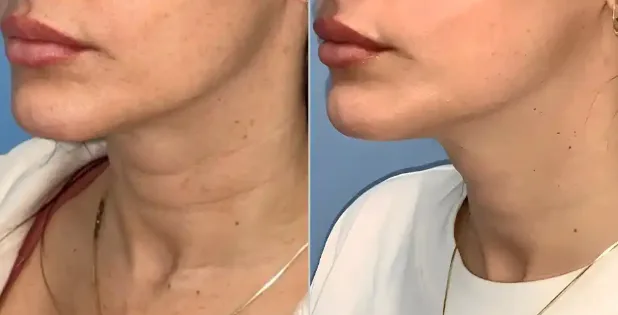
Sofwave for face and neck: Sofwave is particularly effective for post-weight loss facial skin tightening. A single treatment can address jowls, neck laxity, and overall facial skin quality with minimal discomfort and no downtime.
“The most common areas will be the lower part of the face and the neck,” explains the kalon Dermatology team. “The next one will be lifting the eyebrows. People who have kind of sagging or low eyebrows, Sofwave can help with that.”
Realistic expectations for face and neck: Most patients see noticeable improvement in facial skin tightness, with results that make them look refreshed and years younger. The degree of improvement depends on the severity of laxity and individual skin quality.
Do Creams, Supplements, or Exercise Help Tighten Skin?
If you have searched for solutions to loose skin, you have likely encountered claims about firming creams, collagen supplements, and exercises. Here is an honest assessment of what these approaches can and cannot do.
Firming creams and lotions can improve skin hydration and texture, making skin look and feel better. Products containing retinoids may support collagen production over time. However, even the best topical products cannot tighten skin that has lost significant structural support. They can complement professional treatments but should not be expected to produce dramatic tightening on their own.
Collagen supplements have limited evidence for skin tightening. While some studies suggest oral collagen may support skin health, the results are modest and cannot address significant laxity. Eating a protein-rich diet that supports your body’s natural collagen production is generally more beneficial.
Strength training builds muscle that can fill out loose skin, improving your overall appearance. Building muscle is valuable and recommended, but it does not actually tighten the skin itself. What it does is provide more volume beneath the skin, which can make laxity less noticeable.
Facial exercises may help tone underlying muscles, but they do not address skin laxity. In some cases, aggressive facial exercises can actually contribute to wrinkles.
The bottom line: These approaches support overall skin health and can complement professional treatment, but they cannot substitute for treatments that actually stimulate collagen production in the skin. If you have noticeable laxity after weight loss, professional intervention is typically needed for meaningful improvement.
When Non-Surgical Treatment Works vs When You Need Surgery
Being honest about what non-surgical options can achieve helps ensure you have realistic expectations and make the right choice for your situation.
Non-surgical treatments work best for:
- Mild to moderate skin laxity
- Patients with reasonable remaining skin elasticity
- Face and neck concerns
- Patients who want improvement without surgery risks or downtime
- Those willing to accept gradual improvement rather than dramatic change
- Patients who are not candidates for surgery due to health concerns
Surgery may be needed for:
- Severe skin laxity with significant excess skin
- Skin that hangs or creates folds
- Large abdominal apron (pannus) after major weight loss
- Inner thigh laxity with substantial excess skin
- When non-surgical results would be too subtle to satisfy your goals
Body areas that respond well to non-surgical treatment:
- Face and neck (best results)
- Arms (mild to moderate laxity)
- Abdomen (mild cases)
Body areas that often need surgery:
- Significant abdominal skin excess
- Inner thighs with substantial laxity
- Areas with skin folds or hanging skin
An honest assessment is essential. During your consultation, a qualified provider will evaluate your skin laxity and give you a realistic picture of what non-surgical treatment can achieve. Some patients find that non-surgical options provide enough improvement to avoid surgery entirely. Others choose non-surgical treatment as a starting point and may consider surgery later if they want more correction.
What to Expect from Non-Surgical Skin Tightening Results
Setting realistic expectations is crucial for satisfaction with any cosmetic treatment.
Results are gradual, not immediate. Non-surgical skin tightening works by stimulating your body’s collagen production. This natural process takes time. Expect to see initial improvement within two to four weeks, with continued enhancement over three to six months.
“The results are not immediately visible because of the effect of collagen stimulation. It takes a few weeks to a month to get that result,” explains the kalon Dermatology team.
Typical improvement ranges from 20 to 40 percent tightening. This is meaningful improvement that can make a visible difference in your appearance, but it is not equivalent to surgical skin removal. For many patients, this degree of improvement is exactly what they want. It creates a refreshed, firmer look without the dramatic change of surgery.
Results depend on your individual situation. Patients with better skin quality and mild to moderate laxity typically see more noticeable results. Those with severe laxity may see improvement but should have realistic expectations about the degree of change possible without surgery.
Multiple sessions may be needed for some patients. “The amount of sessions is usually individual, but it is between one or two sessions between three to six months apart,” notes the kalon Dermatology team. Your provider will recommend a treatment plan based on your specific concerns.
Results are lasting but not permanent. The collagen you build is real and yours to keep. However, the aging process continues. “The results are permanent because there are no chemicals involved. It’s stimulating your own collagen,” explains the team. “But they’re not permanent because you still live on Earth, and the effects of gravity will pull it down. You’ll probably have to repeat the procedure over time.”
Maintenance helps preserve results. Most patients benefit from annual maintenance treatments to support ongoing collagen production and stay ahead of the aging process.
Post-Weight Loss Skin Tightening at kalon Dermatology
At kalon Dermatology, we understand how frustrating it can be to work hard to lose weight only to feel self-conscious about loose skin. Our experienced team offers non-surgical treatments designed to help you feel as good about your appearance as you do about your health achievements.
Why patients choose kalon Dermatology:
We specialize in non-surgical skin rejuvenation and understand the unique concerns of post-weight loss patients. We take time to assess your specific situation and provide honest recommendations about what treatments can realistically achieve for you.
We offer Sofwave technology for effective face and neck skin tightening with improved comfort compared to older devices. Our medical-grade numbing protocols and optional laughing gas ensure your treatment experience is as comfortable as possible.
Supporting your weight loss journey:
Losing weight is an incredible accomplishment that benefits your health in countless ways. Loose skin does not diminish that achievement. If improving your skin helps you feel more confident and comfortable in your body, we are here to support that goal.
What patients say about their experience:
“The doctor was very thorough, taking the time to answer all of my questions without rushing through the appointment. I felt genuinely cared for and valued as a patient.”
“Dr. Danny is the best and very knowledgeable. He will recommend what’s best and won’t try to sell you bs.”
kalon Dermatology serves patients from Sheepshead Bay, Brighton Beach, Midwood, and surrounding Brooklyn neighborhoods, as well as Staten Island’s North Shore community.
Conveniently located to serve you:
Brooklyn (Sheepshead Bay) 2792 Ocean Ave, 2nd Floor Brooklyn, NY 11229 Monday through Thursday: 10:00 AM to 6:00 PM Friday: 9:00 AM to 3:00 PM
Staten Island (West Brighton) 796 Castleton Ave Staten Island, NY 10310 Monday: 10:00 AM to 7:00 PM Friday: 9:00 AM to 5:00 PM
Schedule a consultation to discuss your options and learn what non-surgical skin tightening can achieve for your post-weight loss concerns.
FAQs About Skin Tightening After Weight Loss
How much weight loss causes loose skin?
Loose skin can occur with any significant weight loss, but it is more common and more pronounced after losing 50 pounds or more. Factors like age, how quickly you lost weight, how long you carried excess weight, genetics, and skin quality all affect how much loose skin you will have.
Will insurance cover skin tightening after weight loss?
Non-surgical cosmetic treatments are not covered by insurance because they are considered elective. Some surgical skin removal procedures may be covered if they are medically necessary (for example, if excess skin causes rashes or infections), but cosmetic procedures are typically out-of-pocket expenses.
How long should I wait after losing weight to get treatment?
Most experts recommend waiting six months to one year after reaching your goal weight. This allows your skin time to naturally retract as much as it will and ensures your weight is stable. However, if your weight has been stable for several months and you are frustrated with loose skin, there is no reason to wait indefinitely.
Can I get treatment if I am still losing weight?
It is generally better to wait until you have reached or are very close to your goal weight. Continuing to lose weight after treatment could create additional laxity. However, if you have significant facial concerns and your weight loss is nearly complete, treatment may be appropriate. Discuss your situation with your provider.
How many sessions will I need?
Most patients achieve meaningful improvement with one to two Sofwave sessions. Some treatments like radiofrequency microneedling may require a series of three to four sessions for optimal results. Your provider will recommend a treatment plan based on your specific concerns.
What if I have loose skin on my stomach? Will non-surgical work?
Non-surgical treatments can improve mild abdominal skin laxity, but results are more limited than on the face and neck. Patients with significant abdominal skin excess, especially skin that hangs or creates folds, typically need surgical intervention (such as a tummy tuck) for meaningful improvement. During your consultation, we will give you an honest assessment of what non-surgical treatment can achieve for your specific situation.
Disclaimer: This article is for informational purposes only and is not a substitute for professional medical advice, diagnosis, or treatment. Always consult a qualified healthcare provider with any questions about a medical condition.
Disclaimer
Medically reviewed by Danny Bronshtein, NP-C, MSN
This content is for educational purposes only and is not intended as medical advice, diagnosis, or treatment. Please consult a qualified healthcare provider for personalized recommendations.